Venezuela Political Upheaval Boosts Chevron, Signals Shift in Global Energy Markets
 Staff Editor
 Venezuela’s Political Upheaval Ignites a New Era for Global Energy Markets
The seismic arrest of President Nicolás Maduro in Venezuela has electrified the global energy sector, sending shockwaves through financial markets and signaling the possible dawn of a new chapter for one of the world’s most oil-rich nations. For years, Venezuela’s vast reserves—rumored to eclipse even those of Saudi Arabia—have been locked behind a fortress of political instability, infrastructural decay, and international sanctions. Now, as the balance of power shifts, investors and energy executives are recalibrating their strategies in anticipation of a dramatically altered landscape.
Chevron’s Strategic Advantage and Wall Street’s Response
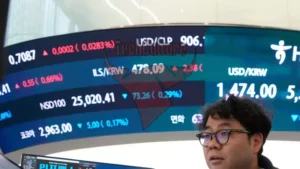
Chevron, long the lone major U.S. operator in Venezuela under special licenses, has emerged as the immediate beneficiary of the unfolding drama. The company’s stock leapt 4.4% as news of Maduro’s capture broke, reflecting a market eager to price in the prospect of regulatory realignment and renewed access to Venezuela’s prodigious oil fields. The optimism has not been confined to Chevron alone; energy giants ExxonMobil and ConocoPhillips also saw their shares climb, underscoring a broad-based belief that the winds of change may finally be blowing through Caracas.
This surge in investor confidence is not without precedent. The Dow Jones Industrial Average soared to record highs, buoyed by gains in energy and defense stocks—a testament to the market’s faith in the stabilizing power of U.S. intervention. Yet, beneath the exuberance lies a sober appreciation of the challenges ahead. Venezuela’s oil infrastructure has suffered from decades of neglect and underinvestment, and the extraction of its extra-heavy crude demands both cutting-edge technology and billions in capital expenditures. The scale of the required overhaul is daunting, with estimates running into the tens of billions of dollars just to restore production to pre-crisis levels.
Geopolitical Stakes and the New Energy Security Paradigm
The implications of renewed U.S. engagement in Venezuela extend far beyond the realm of corporate profits. For decades, Venezuela’s oil reserves have been a linchpin in the global energy order, shaping the calculus of major powers and underpinning U.S. energy security. The current pivot suggests a more assertive American strategy—one that leverages diplomatic and economic tools to secure vital resources, even in the face of formidable technical and political obstacles.
This recalibration is emblematic of a broader trend: energy security is increasingly synonymous with national security. As geopolitical rivalries intensify and supply chains grow more fragile, the ability to access and control key energy assets has become a strategic imperative. The Venezuelan episode thus serves as a microcosm of the evolving global energy narrative, where the pursuit of stability and supply certainty often trumps concerns over cost and complexity.
Navigating Risk, Opportunity, and the Road Ahead
While the immediate market reaction has been one of exuberance, the path forward is anything but straightforward. Chevron and its peers may enjoy a first-mover advantage, but the success of any revival hinges on Venezuela’s capacity to enact meaningful regulatory reforms and attract sustained international investment. The bond market’s rally on Venezuelan government debt hints at a growing belief in the possibility of debt restructuring and economic normalization—yet these hopes rest on the fragile foundation of political renewal.
Equally pressing are the environmental and technological challenges posed by Venezuela’s extra-heavy crude. Extracting and refining this resource is a complex, resource-intensive process, raising difficult questions about the trade-offs between economic revitalization and ecological stewardship. For investors and policymakers, the imperative will be to strike a delicate balance: fostering growth and stability while insisting on transparency and sustainability.
The events unfolding in Venezuela are a potent reminder that shifts in political power can reverberate across continents, redrawing the map of global commerce and technology. As the world watches, the interplay of ambition, risk, and innovation in Venezuela’s oil sector will shape not only the fortunes of companies like Chevron, but also the future contours of the energy industry itself. The stakes, both economic and geopolitical, have rarely been higher.