Trump’s 25% Tariff on Indian Imports Reshapes Global Trade and Geopolitics
 Staff Editor
 Trump’s India Tariff: Where Trade Policy Meets Geopolitical Chess
The latest volley in the ongoing global trade saga arrives with a distinctly sharp edge: President Trump’s 25% tariff on Indian imports. On its surface, the move appears to be a straightforward response to India’s own high tariffs on U.S. goods and its continued partnership with Russia in defense and energy—an arrangement that has grown increasingly sensitive in the shadow of the Ukraine war. Yet, beneath this apparent tit-for-tat lies a far more intricate strategy, one that weaves together economic leverage, geopolitical signaling, and the recalibration of international alliances.
Beyond Trade Deficits: Tariffs as Instruments of Power
At the heart of this policy is the U.S. trade deficit with India, which stands at a formidable $45.7 billion. Tariffs, in this context, are not just about balancing the books. They are a lever—a way to bring India to the negotiating table and, more subtly, to nudge New Delhi toward a geopolitical alignment more palatable to Washington. The Trump administration’s calculus is clear: economic tools can serve as powerful adjuncts to traditional diplomacy, especially when the stakes involve not just trade flows, but the contours of global influence.
This is hardly an isolated phenomenon. The resurgence of protectionist policies has become a defining feature of the current era, with the U.S. challenging trade arrangements from Brussels to Tokyo and beyond. The rationale is consistent: existing deals, so the argument goes, are outdated and insufficiently reciprocal. Yet, the reality is more complex. Such moves inject a dose of uncertainty into global markets, with investors quick to react to the prospect of disrupted supply chains and shifting regulatory sands.
Market Volatility and the New Rules of Engagement
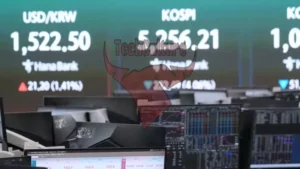
For multinational corporations and global investors, the implications are immediate and profound. Tariffs of this magnitude do not operate in a vacuum. They ripple through currency markets, unsettle established supply chains, and force companies to rethink their operational strategies. The announcement alone has historically been enough to move markets, and the prospect of a protracted trade dispute between two major economies raises the specter of prolonged volatility.
Moreover, these policy shifts challenge the legal and operational frameworks that underpin international commerce. Companies that have spent years optimizing their cross-border operations now face the daunting prospect of regulatory whiplash—where yesterday’s rules no longer apply, and today’s strategies may be obsolete by tomorrow. The business community, ever attuned to risk, must now navigate a landscape where political calculation is as important as economic fundamentals.
The Ethics and Efficacy of Economic Coercion
There is a deeper, more philosophical question that shadows these developments: To what extent should economic power be wielded as a tool to shape the domestic or strategic choices of other nations? India’s engagement with Russia is not merely transactional; it is rooted in its quest for energy security and regional stability. For Washington, leveraging tariffs to alter this calculus is a high-stakes gamble—one that risks antagonizing a key partner while testing the limits of economic statecraft.
This tension is further heightened by reports of a potential U.S.-Pakistan oil deal, a move that could upend longstanding regional dynamics and reverberate across global energy markets. Such maneuvers underscore the fluidity of current alliances and the willingness of the U.S. to reconsider old certainties in pursuit of new strategic objectives.
A New Era of Strategic Trade
President Trump’s tariff on Indian goods is more than a headline-grabbing policy—it is a microcosm of a new era in international trade, where economic and geopolitical priorities are increasingly interwoven. The challenge for business leaders, policymakers, and investors alike is to parse these signals with both rigor and nuance, recognizing that the rules of engagement are evolving in real time.
As global markets absorb the shockwaves of this latest move, one thing is clear: the intersection of trade and geopolitics is now the primary theater where the future of international commerce will be contested. For those navigating this landscape, agility, insight, and a willingness to question old paradigms are no longer optional—they are essential.