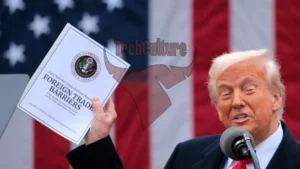
Trump vs. Powell Clash: The Fight for Federal Reserve Independence and Global Economic Stability
 Staff Editor
 Trump vs. Powell: The High-Stakes Battle Over Central Bank Independence
In the relentless theater of American economic policy, the latest public clash between former President Donald Trump and Federal Reserve Chair Jerome Powell is more than a mere personality contest. It is a revealing episode in the ongoing struggle to define the boundaries between political ambition and the principled stewardship of monetary policy—an issue with profound implications for global markets, institutional credibility, and the very architecture of modern capitalism.
The Power—and Peril—of Monetary Policy in Political Crosshairs
Interest rates, often discussed in technical terms, are the silent levers that shape the everyday realities of businesses and households alike. They dictate the cost of mortgages, the feasibility of business expansion, and the appetite for consumer spending. When Trump, in a scrawled note, accused Powell of “costing the U.S. economy a fortune” through elevated rates, he was channeling a populist frustration familiar to any leader facing sluggish growth or market anxiety.
Yet, the deeper narrative is Powell’s unwavering commitment to an independent, data-driven approach—an ethos forged from the hard lessons of history. Central banks that succumb to political pressure risk igniting inflationary spirals, destabilizing currencies, and eroding public trust. The cautionary tales of hyperinflation in politically compromised economies serve as stark reminders of the perils that await when monetary policy becomes a tool for short-term political gain rather than long-term stability.
Institutional Safeguards: The Federal Reserve’s Delicate Design
The Federal Reserve’s structure is not an accident of bureaucracy but a deliberate bulwark against the very temptations now playing out in the headlines. The Federal Open Market Committee (FOMC), composed of a tapestry of presidents and governors from across the nation, is designed to diffuse power and draw on a spectrum of regional and sectoral expertise. This architecture acts as a firewall against the risks of single-handed, populist economic direction.
Trump’s hints at replacing Powell or handpicking successors signal a willingness to bypass these safeguards—an approach that, if realized, could undermine the Fed’s credibility and invite market volatility. For investors and business leaders, the threat is not only the immediate uncertainty such moves would introduce but the longer-term risk of a paradigm shift in U.S. economic policy, where expert governance is sidelined in favor of political expediency.
Geopolitical Ripples and Market Sensitivities
The reverberations of this standoff extend well beyond the corridors of Washington. In a global economy already rattled by trade tensions and tariff wars, the prospect of political interference in U.S. monetary policy sends shivers through international markets. The recent stock market declines, triggered by a combination of tariff threats and interest rate anxieties, underscore investors’ acute sensitivity to any sign that the foundational rules of economic engagement might be upended.
For technology firms and multinational corporations, the stakes are particularly high. The intersection of monetary policy and global trade dynamics means that every policy misstep or hint of instability can cascade through supply chains, capital flows, and investment decisions on a worldwide scale. Fund managers and corporate strategists are recalibrating their risk models, watching for signals that the world’s largest economy might drift toward less predictable, more politically driven economic management.
The Ethical Imperative: Trust, Accountability, and the Future of Governance
At its heart, the Trump-Powell dispute is not only a matter of economics but a test of governance and ethical stewardship. The independence of the Federal Reserve is more than a procedural nicety; it is a cornerstone of public trust and a safeguard against the corrosive effects of short-termism. When central banks are insulated from the political cycle, they can pursue policies that, while sometimes unpopular, are essential for sustainable growth and financial stability.
Business and technology leaders, attuned to the intricate dance between policy and market confidence, recognize that the credibility of institutions is a form of capital as vital as any balance sheet. The current episode serves as a reminder that, in a world of accelerating change and interconnected risks, the resilience of our economic system depends on a careful balance—one that values expertise, transparency, and the courage to resist the easy allure of political expedience.