Tesla’s Profit Plunge and Sales Decline Amid Elon Musk’s Controversial Political Ties
 Staff Editor
 Tesla’s Political Calculus: When Leadership, Brand, and Partisanship Collide
Tesla’s journey from Silicon Valley darling to a global electric vehicle powerhouse has long been propelled by a narrative of innovation, environmental stewardship, and visionary leadership. Yet, as recent developments reveal, the company’s trajectory is now shadowed by the complex realities of political engagement and brand identity—a confluence that is testing the limits of consumer loyalty and market resilience.
Elon Musk’s Political Foray: A Strategic Misstep
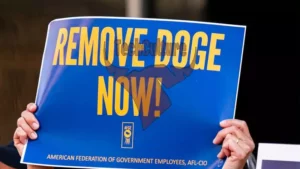
Elon Musk’s high-profile engagement with the Trump administration, particularly through his participation in the so-called Department of Government Efficiency (Doge), has ignited a firestorm of debate. Scott Galloway, a respected marketing professor and commentator, recently dissected this move on the Pivot podcast, framing it as a profound miscalculation with reverberations far beyond the boardroom.
The crux of the controversy lies in the discordance between Musk’s political alliances and Tesla’s core customer base. Tesla’s brand has historically been synonymous with progressive values, environmental consciousness, and technological disruption—attributes that resonate most strongly with consumers who lean away from the partisan politics associated with the Trump administration. By stepping into a political arena defined by stark polarization, Musk risks eroding the very brand equity that made Tesla a household name among forward-thinking, sustainability-minded buyers.
This misalignment is not merely theoretical. Data indicates that three-quarters of Republican voters remain uninterested in electric vehicles, underscoring the futility of courting a demographic that is fundamentally at odds with the product’s ethos. Meanwhile, Tesla’s traditional supporters—who have championed the company’s mission to accelerate the world’s transition to sustainable energy—are left grappling with a perceived betrayal of values.
The Fragility of Brand Trust in a Polarized Era
The fallout from Musk’s political entanglements is starkly reflected in Tesla’s brand reputation metrics. Once celebrated as the eighth-most reputable brand in 2021, Tesla has tumbled to 95th place—a precipitous decline that mirrors waning consumer trust. This reputational erosion is not confined to the United States; it is echoed in falling sales across key European markets such as Sweden and France, where public sentiment around environmental policy and corporate responsibility is particularly acute.
These developments illuminate a critical truth of the modern marketplace: brand allegiance is no longer just about product quality or technological edge. It is also about alignment with social values and the ability to maintain authenticity amid shifting cultural and political landscapes. For Tesla, the risks of brand dilution are compounded by the global nature of its business, where regional regulatory regimes and consumer expectations can amplify the consequences of political missteps.
Competitive Pressures and Financial Reverberations
As Tesla grapples with these reputational headwinds, its competitive environment is evolving rapidly. The rise of Chinese automaker BYD, which has recently overtaken Tesla in European EV sales, exemplifies a new era of global competition where technological innovation is necessary but not sufficient. Market leadership now demands strategic agility, cultural sensitivity, and the ability to navigate geopolitical complexities without alienating core constituencies.
Financially, the stakes have never been higher. Tesla’s profits have reportedly plummeted by 71%, a decline that signals more than just operational challenges. Investor confidence is increasingly tied to perceptions of non-financial risk, including the potential fallout from political controversies. As global markets grow more attuned to the interplay between corporate governance and public sentiment, the margin for error narrows.
Lessons for the Age of Corporate Activism
The Musk–Trump–Tesla episode offers a vivid tableau of the dangers that await when corporate leadership strays too far from its foundational ethos in pursuit of political capital. In an era where every executive decision is scrutinized through the twin lenses of social values and financial performance, the imperative for clarity, consistency, and authenticity has never been greater.
Tesla’s experience serves as a cautionary tale for business leaders navigating the volatile intersection of commerce and politics. The lesson is clear: in a world where brand trust is both fragile and fiercely defended, the surest path to enduring success lies not in chasing fleeting political influence, but in steadfastly honoring the principles that first captured the world’s imagination.