Rising Strait of Hormuz Tensions Threaten Global Oil Supply, Accelerate Renewable Energy Shift
 Staff Editor
 Strait of Hormuz: Where Geopolitics and Energy Security Collide
The Strait of Hormuz, a slender maritime corridor threading the Persian Gulf to the open seas, has long been the fulcrum upon which global energy security pivots. Recent revelations from Sultan Al Jaber, echoing through the corridors of power from Washington to Tehran, have made it clear: despite a tenuous ceasefire between the United States and Iran, the strait’s effective closure is not merely a matter of military posturing but a manifestation of deeper, shifting political imperatives within Iran. The world’s gaze, once again, is fixed on this vital chokepoint—not just for its strategic significance, but for what its volatility signals about the precarious balance underpinning international commerce and stability.
The Choke Point That Moves Markets
Nearly a fifth of the world’s oil and gas flows through the Strait of Hormuz. Any disruption, even the whisper of closure or the imposition of new fees on commercial vessels, reverberates instantly through global markets. This week’s surge in Brent crude prices, flirting with the $100 per barrel mark, is not merely a reaction to supply constraints—it is an indicator of the market’s acute sensitivity to geopolitical risk. For energy traders and supply chain managers, the closure is more than an operational headache; it is a reminder of the fragility of the systems that keep economies humming.
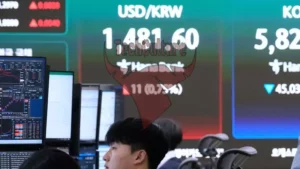
Financial markets in Asia have already registered the shockwaves, with energy stocks spiking and broader indices oscillating in response to every new development in the Gulf. The message to policymakers and investors is unmistakable: the stability of global financial systems is now tethered to the unpredictable dynamics of regional power struggles. Domestic economic indicators, once the primary compass for forecasting risk, now share the stage with the maneuvers of military fleets and the rhetoric of political leaders thousands of miles away.
Energy Transition: A Catalyst for Change
The ongoing crisis in the Strait of Hormuz is not just a story of oil tankers and warships; it is also accelerating a far-reaching conversation about the future of energy. As the cost of crude climbs and the threat of military escalation looms, the rationale for diversifying away from fossil fuels gains new urgency. For governments and industry leaders, the imperative to invest in renewable energy technologies and resilient supply chains is no longer a matter of long-term planning but of immediate strategic necessity.
This moment may well serve as a catalyst for the next phase of the global energy transition. The specter of militarized logistics and the blending of economic sanctions with regulatory hurdles highlight the vulnerabilities inherent in over-reliance on a single region. Nations are now more likely to reassess their alliances, diversify their energy portfolios, and build redundancy into critical infrastructure. The hope is that such moves will buffer economies against the next geopolitical tremor—whether it emanates from the Gulf, the South China Sea, or elsewhere.
The Human and Ethical Dimensions
Beyond the metrics of price and supply, there is a profound ethical dimension to the current standoff. Iranian warnings against Israel and military actions in Lebanon underscore the human cost of geopolitical brinkmanship. Civilians in the region, caught in the crossfire of strategic deterrence and economic leverage, bear the brunt of decisions made in distant capitals. The intertwining of warfare, sanctions, and political maneuvering forces a reckoning with the moral responsibilities of statecraft in an age of interconnected risk.
The world’s response to the Strait of Hormuz crisis will be a measure not only of diplomatic acumen but of collective ethical resolve. As shipping lanes remain in limbo and energy markets oscillate, the challenge is clear: to safeguard the arteries of global commerce while upholding the principles of peace and human dignity. The stakes are high, and the path forward demands not just technical solutions, but a renewed commitment to collaborative, ethically informed action on the world stage.