Rising Oil Prices Surge Amid US-Iran Tensions, Impacting Global Markets and Inflation
 Staff Editor
 Oil, Geopolitics, and the High-Wire Act of Global Markets
The world’s oil markets are no strangers to drama, but the recent surge in prices—sparked by President Trump’s forceful warning of possible military action against Iran—has once again thrown the intricate relationship between geopolitics and economics into sharp relief. The immediate rally in both Brent and West Texas Intermediate crude benchmarks, vaulting to heights unseen in months, is more than a headline-grabbing spike; it’s a vivid illustration of how quickly investor sentiment can be upended by the specter of instability.
The Double-Edged Sword of Rising Oil Prices
For oil-exporting nations and energy giants, the price surge delivers a windfall. Shares of BP and Shell, stalwarts of London’s FTSE 100, have surged alongside the commodity they extract and refine. For these firms and their shareholders, the calculus is simple: higher prices mean higher revenues, at least in the near term.
Yet this rising tide does not lift all boats. The downstream effects of more expensive energy ripple out quickly, especially across economies already grappling with inflationary pressures. In the UK, the spike in oil prices has coincided with a notable uptick in government bond yields, signaling higher borrowing costs ahead. For over a million British homeowners, this translates into the very real prospect of increased mortgage payments—a tangible reminder that commodity market tremors can shake household finances with alarming speed. Energy, after all, is a core input for everything from transportation to manufacturing, and its price is woven deeply into consumer price indices worldwide.
Asia’s Market Jitters and the Global Risk Calculus
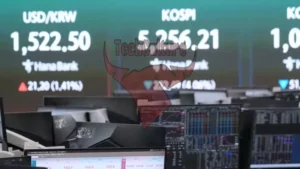
The reverberations have not been confined to Western markets. In Asia, equity indices such as Japan’s Nikkei and South Korea’s Kospi registered sharp declines, reflecting a swift recalibration of risk by investors. For these export-driven economies, where energy import costs are a critical line item and supply chains stretch across borders, the threat of Middle Eastern instability is more than a distant worry—it’s a direct challenge to growth and profitability.
This reaction underscores a broader truth about global markets: geopolitical tensions, especially those centered on critical nodes like the Strait of Hormuz, can rapidly trigger a reassessment of asset values. The interconnectedness of modern supply chains means that policy shocks in one region can echo worldwide, prompting shifts in capital flows and investment strategies that can reshape entire sectors.
Diplomacy, Deterrence, and the Fragile Balance of Power
Amid the market volatility, diplomatic efforts between Iran and Oman have emerged as a possible stabilizing force, with discussions aimed at safeguarding marine traffic through the Strait of Hormuz—a chokepoint for nearly a fifth of global oil shipments. Yet these tentative signs of détente are overshadowed by the unpredictability injected by President Trump’s rhetoric. The juxtaposition of military posturing with diplomatic overtures is emblematic of a U.S. foreign policy approach that is increasingly difficult for markets, and indeed for allies and adversaries alike, to parse.
This dual-track strategy has far-reaching implications. Regulatory bodies and national governments may be compelled to revisit contingency plans and risk mitigation frameworks, seeking ways to insulate their economies from the whiplash of future geopolitical shocks. The energy sector, in particular, faces renewed pressure to diversify supply routes and invest in resilience, lest a single chokepoint imperil global flows.
Ethical Fault Lines and the Power of Policy Pronouncements
Beyond the immediate economic fallout lies a more profound ethical dilemma. The use of aggressive rhetoric—knowing its potential to roil markets and impact the livelihoods of millions—raises questions about the responsibilities of leadership in a hyperconnected world. As governments strive to balance national interests with the imperative to safeguard economic stability, the need for measured, transparent communication has never been more acute.
This latest episode serves as a potent reminder that, in the global energy ecosystem, political decisions are rarely isolated. The tremors from a single speech can cascade through markets, boardrooms, and households alike, underscoring the enduring truth that the world’s economic and political destinies remain tightly intertwined.