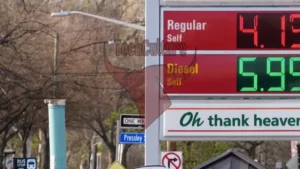
Middle East Tensions Push U.S. Gasoline Prices to $3.25 Amid Global Oil Market Volatility
 Staff Editor
 Geopolitics at the Pump: How Middle East Tensions Reshape the U.S. Gasoline Market
As U.S. drivers absorb a sudden 27-cent leap at the gasoline pump, the world is reminded once again that oil markets are not merely governed by supply and demand, but by the unpredictable tides of geopolitics. The latest escalation—fueled by intensifying conflict involving the U.S., Israel, and Iran—has sent gasoline prices surging to $3.25 per gallon, with the specter of $3.40 looming if current trends persist. This jolt is not just a blip for consumers; it’s a vivid demonstration of how deeply the global energy matrix is woven into the fabric of international affairs.
Domestic Strength, Global Exposure
The United States stands today as the world’s leading crude oil producer, a position that has fostered a sense of energy resilience. Yet, even this formidable domestic output cannot fully shield American consumers or businesses from the aftershocks of overseas turmoil. Iran’s strategic leverage over the Strait of Hormuz—through which a fifth of the world’s oil supply flows—remains a potent wildcard. Any disruption in this critical chokepoint reverberates instantly through global supply chains, amplifying market anxieties and driving up prices, regardless of how much oil is pumped from American soil.
This delicate dance between self-reliance and vulnerability is the new normal. The U.S. may be less susceptible to the most dramatic supply shocks, but the global oil market’s interconnectedness means that price volatility, driven by distant conflicts, is here to stay. The current surge is a case study in how market sentiment is shaped as much by geopolitical risk as by barrels in storage or rigs in operation.
Policy, Markets, and the Self-Correcting Machine
The Biden Administration’s rapid mobilization to explore countermeasures is emblematic of a long-standing pattern: policymakers are compelled to balance immediate market stabilization with the need for long-term energy security. The stakes are high. Should oil prices breach $125 per barrel, economists warn of a potential 0.8% contraction in GDP and a 4% spike in inflation—a scenario that would test the mettle of both fiscal policy and consumer confidence.
Yet, the market has its own self-correcting impulses. With prices hovering above $70 per barrel, U.S. shale producers are poised to ramp up output—a testament to the flexibility and technological prowess that now characterize the American energy sector. This dynamic injects a measure of resilience into the system: higher prices incentivize production, which in turn can moderate price spikes. Still, this feedback loop offers only partial relief, as the broader anxieties of global supply disruptions and political instability persist.
The Ethics and Future of Energy Security
What emerges from this moment is a fundamental question: how should energy policy evolve in an era where environmental, ethical, and diplomatic considerations are inseparable from economic imperatives? The global energy market is in the midst of a profound recalibration. Policymakers must now weigh the imperatives of energy security against the urgent need to accelerate the transition to sustainable power sources. The stakes extend far beyond the price at the pump; they encompass climate change, international diplomacy, and the ethical dimensions of resource extraction.
The present gasoline price surge is not just a fleeting economic inconvenience—it is a mirror reflecting the complexities and contradictions of the modern energy landscape. It underscores the reality that true resilience will require more than just increased domestic production or reactive policy maneuvers. It will demand a nuanced, forward-looking approach that harmonizes market forces, technological innovation, and a commitment to sustainable, ethically conscious energy systems.
As the world watches the interplay between political flashpoints and economic realities, one thing becomes clear: the story of energy in the twenty-first century will be written at the intersection of global risk and local consequence, where every price spike is a reminder of the intricate web connecting nations, markets, and the future of the planet itself.