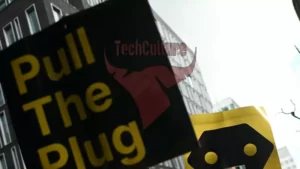
Microsoft Developer Conference Disrupted Amid Rising Employee Activism Over Ethical and Geopolitical Concerns
 Staff Editor
 Microsoft’s Disrupted Conference: When Employee Activism Confronts Geopolitical Reality
The annual developer conference is typically the crown jewel in Microsoft’s calendar—a showcase of innovation, engineering prowess, and corporate optimism. This year, however, the event was abruptly transformed into a stage for a different kind of unveiling: a raw, public confrontation with the ethical dilemmas that increasingly define the technology sector. The disruption, led by Joe Lopez, a firmware engineer with hands-on experience in Microsoft’s Azure cloud platform, was not just a fleeting interruption. It was a clarion call echoing through the corridors of the world’s most powerful tech companies.
Internal Dissent and the Rise of Tech Employee Activism
Lopez’s protest, which directly challenged CEO Satya Nadella to acknowledge Microsoft’s alleged role in enabling Israeli military operations, did not arise in a vacuum. It was the latest, and perhaps most visible, manifestation of a growing movement within the technology sector: employee activism. Campaigns like No Azure for Apartheid (Noaa) have galvanized internal stakeholders, transforming what might once have been private grumblings into coordinated, public demands for ethical accountability.
This internal mobilization is not simply about moral posturing. Increasingly, employees—especially those with technical expertise and a direct stake in product deployment—are leveraging their insider knowledge to question the societal impact of their work. As they do so, they are forcing technology giants to confront uncomfortable truths about the real-world consequences of their products and partnerships. The days when cloud computing, artificial intelligence, and data analytics could be sold as neutral tools are fading fast. Now, the ethical dimensions of technology are front and center, shaping not just internal culture but public perception and shareholder value.
Market Consequences and the Shadow of Reputational Risk
For Microsoft and its peers, the stakes extend far beyond internal discord. The intersection of technology and geopolitics is a minefield, and controversies like this one can have profound market implications. Consumer trust, investor confidence, and employee loyalty are all fragile assets, easily shaken by revelations of complicity in contentious global conflicts. Activist-driven scrutiny over the use of cloud infrastructure and AI in military or surveillance contexts threatens to erode these pillars, prompting calls for boycotts and divestment.
Moreover, the specter of regulatory intervention looms larger with each such incident. Governments, sensitive to both public opinion and international law, may be compelled to revisit export controls and oversight mechanisms for technology with dual-use or militaristic potential. What begins as an internal protest can, in this climate, catalyze sweeping changes in how technology is governed and traded on the world stage.
Corporate Diplomacy in an Age of Ethical Reckoning
The resonance of Lopez’s protest was amplified by its timing—coinciding with the 77th anniversary of the Nakba, a day of profound historical significance for Palestinians worldwide. This convergence of historical memory and modern corporate action underscores a vital reality: technology companies are no longer insulated from the world’s most fraught conflicts. Their decisions reverberate across borders, shaping narratives and outcomes in ways that are impossible to ignore.
As the pressure mounts for greater transparency and accountability, technology companies are being called upon to rethink their approach to international partnerships. The calculus is shifting. Financial imperatives alone can no longer justify business relationships that carry the risk of ethical compromise. This is more than a matter of public relations; it is a fundamental question of corporate identity and social responsibility.
Microsoft’s disrupted conference is a microcosm of a larger transformation sweeping the tech industry. It signals the emergence of a new era—one in which corporate diplomacy must be as sophisticated and principled as the technologies these firms create. The choices made now will reverberate for years to come, shaping not only the trajectory of individual companies but the ethical landscape of global technological progress. The world is watching, and the industry’s next moves will define its legacy.