Margaret Atwood’s “The Testaments” on Disney+: Exploring Power, Surveillance & Resistance in the Digital Age
 Staff Editor
 The Testaments: Streaming Dystopia and the Business of Power in the Digital Age
Margaret Atwood’s “The Testaments” arrives on screens not merely as a sequel to the cultural juggernaut “The Handmaid’s Tale,” but as a sophisticated meditation on the mechanics of power, complicity, and resistance. Under Bruce Miller’s direction, the adaptation for Disney+ does more than extend a bleak fictional universe—it crystallizes timely anxieties about authoritarianism, surveillance, and the fragility of individual agency in an era where technology and ideology are increasingly entwined.
Generational Conflict and the Anatomy of Oppression
At the heart of “The Testaments” lies the story of Agnes, whose very existence is a study in duality: the adopted daughter of a Gilead commander, yet the biological child of June/Offred, the original series’ emblem of subversive hope. Agnes’s journey is not just a personal struggle for autonomy—it is a lens through which the audience can examine how systems of oppression perpetuate themselves, distorting both memory and aspiration. Her character arc is a poignant reminder that authoritarian regimes do not only rewrite history; they engineer the future by shaping the minds and loyalties of the next generation.
The introduction of Daisy, a new protagonist, adds further emotional and thematic complexity. Their relationship is fraught with suspicion and longing, mirroring the broader social fabric of Gilead, where trust is a scarce commodity and division among the oppressed is a deliberate tool of control. Through these intertwined narratives, the series interrogates the costs of complicity and the perilous nature of resistance—questions that echo far beyond the boundaries of fiction.
Youth, Indoctrination, and the Battle for Critical Thought
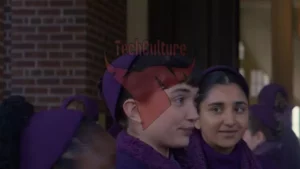
Perhaps the most chilling innovation in this adaptation is the depiction of the Pearl Girls, a cadre of indoctrinated youth under ceaseless surveillance. Their presence is a stark commentary on the vulnerabilities of young people in environments where ideology is weaponized, and conformity is rewarded. The show’s focus on the psychological and emotional development of its younger characters resonates with contemporary debates around education, social media influence, and the erosion of critical thinking in the face of algorithmic manipulation.
For business and technology leaders, these themes are not abstract. In a world where data is currency and behavioral nudges are embedded in every digital interaction, the challenge of safeguarding autonomy—especially for the young and impressionable—has become a defining ethical issue. The Testaments’ narrative, then, is not just a warning about state overreach; it is a call to vigilance for any institution wielding the tools of mass influence.
Streaming as a Catalyst for Cultural Reckoning
The series’ release on Disney+ is itself a signal of the shifting dynamics in media and technology. No longer constrained by the gatekeepers of traditional broadcasting, stories like “The Testaments” find global audiences in an instant, their impact amplified by the very platforms that are reshaping our cultural and political landscapes. This democratization of content distribution, however, brings new responsibilities. Streaming giants are now arbiters of not only taste but also of the ideological narratives that inform public discourse.
As regulatory scrutiny intensifies and the line between entertainment and activism blurs, the business of streaming is increasingly bound up with questions of ethics, accountability, and social impact. How platforms navigate these challenges will shape not only the future of media but the contours of democratic debate itself.
Dystopian Lessons for the Real World
“The Testaments” succeeds not simply as a work of adaptation, but as a mirror held up to a society grappling with the paradoxes of progress and control. Its exploration of power, indoctrination, and the resilience of the human spirit speaks directly to the dilemmas facing leaders in technology, policy, and culture. As audiences worldwide engage with its narrative, the series invites a deeper reckoning: How will we safeguard the integrity of individual thought and democratic values in a world where the boundaries between fiction, technology, and lived reality grow ever more porous?
The answers, as Atwood’s world reminds us, will be written not only in code and policy but in the choices we make—collectively and individually—about the stories we tell and the futures we build.