John McAuliff’s Loudoun Win Signals Demand for Tech Accountability Amid Rising Datacenter Energy Costs
 Staff Editor
 Virginia’s Datacenter Dilemma: John McAuliff’s Win Signals a New Era in Tech Accountability
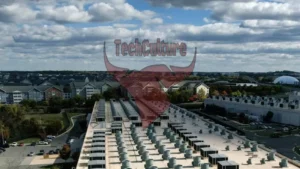
The narrow legislative victory of John McAuliff in Virginia’s Loudoun County is more than a local political surprise—it is a lens through which the shifting tectonics of the digital economy, energy policy, and community agency can be seen in sharp relief. Loudoun, long lauded as the “Data Center Alley” of the world, now emerges as a crucible for debates that will echo far beyond its borders. At stake is nothing less than the future relationship between corporate technological power, public infrastructure, and the communities that bear their hidden costs.
Datacenters, Energy, and the New Social Contract
Datacenters have become the invisible engines of modern life, underpinning everything from streaming video to complex enterprise AI. Yet their voracious appetite for electricity is straining the very grids that make them possible. For years, the economic benefits—jobs, tax revenue, and prestige—have been the dominant narrative. But as McAuliff’s campaign underscored, the calculus is shifting. Residents now confront rising utility bills and infrastructure wear, prompting the question: who truly pays for our digital future?
McAuliff’s framing of datacenter energy demands as an “artificial tax” on local residents struck a chord that transcended party lines. In a district with deep Republican roots, his message resonated with voters weary of abstract ideology and hungry for tangible relief from mounting costs. This signals a broader trend: communities are demanding that technological progress be matched by fair distribution of its burdens, not just its benefits.
Market Forces and the Ethics of Innovation
The projected doubling of energy demand in Loudoun County over the next decade is a clarion call for investment and innovation. Grid modernization, renewable energy integration, and a reevaluation of regulatory frameworks are no longer optional—they are imperative. The stakes are high for utilities, tech giants, and local governments alike. Forward-thinking investment in sustainable energy solutions can yield dividends in cost savings and environmental stewardship, enhancing the competitive positioning of regions that get it right.
Yet, the presence of corporate titans like Amazon and Google complicates the equation. Their immense bargaining power often secures preferential energy rates and regulatory accommodations, raising uncomfortable questions about competitive fairness and the specter of regulatory capture. McAuliff’s victory places these issues at the center of public discourse, advocating for a recalibration that ensures local taxpayers are not left subsidizing the digital ambitions of global corporations.
The Geopolitics of Local Resistance
What happens in Loudoun County does not stay in Loudoun County. The local pushback against unchecked datacenter expansion is a microcosm of a global reckoning. As digital infrastructure becomes ever more centralized, communities that host these critical nodes are asserting their right to shape the terms of engagement. The swing toward a candidate who foregrounded local costs over partisan loyalties is a signal that voters are ready to demand—and influence—policy changes that address the externalities of technological growth.
This dynamic has geopolitical resonance. As nations compete for digital supremacy, the sustainability and social legitimacy of infrastructure investments become strategic concerns. The Loudoun experience may well inspire similar movements in other regions, catalyzing a wave of regulatory innovation and cross-border policy coordination.
Rethinking Progress: Towards Sustainable Digital Communities
At its heart, the debate in Loudoun County is about the ethics of progress. Should communities be passive hosts for corporate expansion, absorbing the costs while multinationals reap the rewards? Or is it time to insist on accountability and shared prosperity? McAuliff’s win suggests a growing appetite for the latter—a demand that the digital economy’s externalities be internalized, its benefits more equitably distributed.
For policymakers and industry leaders, the message is clear: innovation cannot come at the expense of community well-being. The future of digital infrastructure will be shaped not just by technical ingenuity, but by the willingness to forge a new social contract—one that aligns corporate ambition with the imperatives of sustainability, fairness, and local empowerment. Loudoun County’s decisive moment may well be the first ripple in a global tide of change.