Global Trade Tensions and Geopolitical Shocks Drive Market Volatility and Supply Chain Risks
 Staff Editor
 The New Anatomy of Uncertainty: Trade Tensions, Geopolitical Shocks, and the Fragile Global Order
Trade Policy as Catalyst: The U.S. Rewrites the Rules
In the corridors of global commerce, the language of negotiation has grown sharper. President Trump’s recent declarations—escalating rhetoric against the European Union and Japan—signal not just a tactical maneuver, but a deliberate recalibration of the international trading system. By framing the debate around “fairness” and wielding tariff threats as both shield and cudgel, the U.S. administration has injected a potent dose of uncertainty into the bloodstream of global supply chains.
This posture, while couched in the language of defensive nationalism, reverberates far beyond the negotiating table. The specter of imposed trade deals unsettles industries already navigating the shifting sands of consumer behavior and technological disruption. The data tell a story: a preemptive surge in consumer spending, followed by a 0.9% contraction in U.S. retail sales, reveals a market bracing for impact. Such volatility is not merely a statistical blip; it is a barometer of consumer anxiety and a warning flare for policymakers. If this climate of uncertainty persists, the momentum of economic growth itself faces a formidable headwind.
Markets in Flux: Energy, Risk, and the Ripple Effect
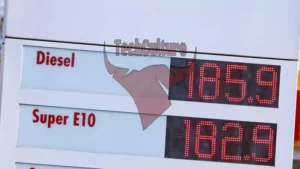
The tremors of trade discord are felt most acutely in the world’s markets, where sentiment can shift with the speed of a tweet. Nowhere is this more evident than in the energy sector. Heightened tensions between Israel and Iran have propelled Brent crude prices nearly 3% higher, a stark reminder that geopolitical risk remains the wild card in any economic forecast. For energy-dependent industries, these price shocks are more than a line item—they are existential threats to margins and long-term planning.
The reverberations extend to the logistics and insurance sectors, where the calculus of risk is being rewritten in real time. War risk premiums for shipments to Israel have soared, forcing a reconsideration of everything from shipping routes to insurance coverage. What emerges is a vivid illustration of how regional instability can unsettle global commodity flows, amplifying risk across the economic landscape. In this interconnected world, the butterfly effect is not a metaphor but a daily operational reality.
Political Assurances vs. Market Realities
Amid this turbulence, political leaders strive to project calm. Labour’s Rachel Reeves has cast the recent UK-U.S. trade deal as a stabilizing force, a beacon amid the storm. Yet, the markets remain unpersuaded. The FTSE 100’s slide to a one-week low is a quiet rebuke, a signal that investors are weighing the compounding risks of energy price spikes and geopolitical uncertainty more heavily than political platitudes.
This skepticism is not confined to equities. It reflects a broader reticence to absorb external shocks, especially when the signals from policymakers are mixed. The narrative of stability is only as convincing as the underlying fundamentals, and right now, those fundamentals are under siege from multiple directions. Investors, always forward-looking, are pricing in a world where volatility is the new normal.
Governance at a Crossroads: The Case of UK Water
Amid the swirl of macroeconomic drama, the UK water industry’s inconclusive regulatory review offers a microcosm of a different—yet equally pressing—challenge. By opting to maintain the status quo in ownership structures, regulators have sidestepped deeper questions of environmental stewardship and financial transparency. The decision exposes a tension at the heart of modern governance: how to balance the efficiencies of private enterprise with the imperatives of public accountability.
This debate is not merely academic. As climate risks mount and infrastructure ages, the governance of essential utilities demands a more imaginative, perhaps even radical, approach. The choice is not simply between public and private, but between inertia and innovation in the face of mounting systemic pressures.
A World in Delicate Balance
The threads connecting trade policy, market sentiment, geopolitical risk, and regulatory governance are more tightly woven than ever. The new reality is one where shocks in one domain reverberate across the entire system, exposing vulnerabilities and testing the resilience of institutions. For business leaders, investors, and policymakers alike, the imperative is clear: cultivate agility, deepen understanding, and prepare for a world where uncertainty is not the exception, but the rule. The risks are profound, but so too are the opportunities for those who can read the signals and adapt with foresight.