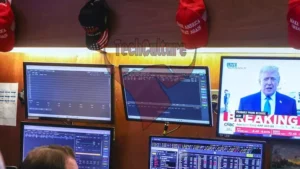
Global Markets Rally as Iran Tensions Ease: Dow Jones Up 928 Points, Oil Prices Plunge 10%
 Staff Editor
 Market Euphoria and the Mirage of Geopolitical Calm
The global financial markets have always been exquisitely sensitive to the tremors of geopolitics, but seldom has this relationship been more vividly illustrated than in the aftermath of President Trump’s recent announcement regarding Iran. With the specter of military action temporarily receding—thanks to a five-day extension and talk of “very good and productive conversations”—the Dow Jones Industrial Average soared by 928 points, a move mirrored in European bourses. Yet beneath this exuberant surface lies a more nuanced and cautionary tale about the interplay of political rhetoric, market psychology, and the fragile architecture of global trust.
The Perils of Political Messaging in the Digital Age
At the heart of this episode is a disquieting truth: the velocity of information, and misinformation, has never been greater. Trump’s optimistic pronouncement was swiftly undercut by Iranian officials, who dismissed any claims of productive dialogue as “fake news.” Such dissonance is not merely a diplomatic footnote; it is a warning signal for investors and analysts alike. In an era where a single tweet or press conference can send billions of dollars surging across exchanges, the challenge of parsing reliable intelligence from political theater has become existential for financial markets.
This dynamic creates an environment ripe for volatility. Investors are compelled to act quickly, often on incomplete or conflicting data, amplifying the market’s tendency to swing between euphoria and anxiety. The sophistication of modern trading algorithms and the proliferation of real-time news feeds mean that reactions are not only rapid but can be self-reinforcing, driving markets further from fundamental realities. For the discerning observer, this is both a marvel of technological progress and a stark reminder of its limitations: no machine, however advanced, can fully compensate for ambiguity at the source.
Oil Prices as Geopolitical Barometer
The swift 10% drop in U.S. crude oil prices, falling below $90 a barrel, is a case in point. Oil remains the global economy’s most sensitive commodity, acutely responsive to every diplomatic overture or saber-rattling statement emanating from the Middle East. The market’s relief at a potential de-escalation was palpable, yet the underlying fragility persists. The Strait of Hormuz, through which a significant portion of the world’s oil flows, remains a perennial flashpoint. Any renewed tension could send prices soaring, with cascading effects on inflation, supply chains, and broader economic stability.
Energy-dependent sectors, from manufacturing to logistics, are particularly exposed to this volatility. For policymakers and corporate strategists, the challenge lies in balancing short-term market optimism with the need for robust contingency planning. The episode serves as a vivid reminder that the price of oil is not merely a reflection of current supply and demand, but a constantly shifting referendum on geopolitical risk.
Global Interdependence and the Limits of Resilience
The ripple effects of the U.S. market rally were felt across Europe, underscoring the deep interdependence of modern economies. European indices rebounded, yet the continent’s underlying vulnerabilities—stagnant GDP growth, eroding consumer confidence, and persistent energy insecurity—remain unresolved. The episode highlights the duality of global markets: their capacity for rapid recovery is matched only by their exposure to systemic shocks.
Regulatory bodies on both sides of the Atlantic now face renewed pressure to strengthen risk management frameworks. The imperative is clear: protect investors and consumers from the whiplash of geopolitical events, while fostering the conditions for sustainable economic growth. This will require not only technical expertise but also an acute awareness of the psychological currents that drive market behavior.
Navigating the Paradox of Optimism and Uncertainty
Ultimately, the recent rally is less a verdict on the prospects for Middle Eastern peace than a reflection of the modern market’s paradox: the capacity for exuberant optimism in the face of persistent uncertainty. For investors, analysts, and policymakers, the lesson is clear. Vigilance, skepticism, and a commitment to verified information are not merely virtues—they are necessities in a world where the boundaries between politics, technology, and economics are increasingly porous. The future will belong to those who can navigate this complexity with clarity, agility, and a healthy respect for the unknown.