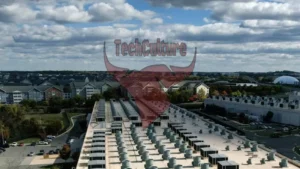
Global AI Datacenter Boom Drives Growth but Strains Water Resources in Latin America
 Staff Editor
 Datacenters and the Digital Dilemma: Navigating the Crossroads of AI Infrastructure and Sustainability
The world’s appetite for artificial intelligence has triggered a construction boom of datacenters, turning once-quiet landscapes into nerve centers of the digital economy. Yet, beneath the hum of servers and the promise of economic revitalization, a deeper tension simmers—between the relentless march of technological progress and the fragile balance of local ecosystems. As nations compete for the spoils of the AI revolution, the debate over datacenter development has become a defining test of how societies reconcile innovation with stewardship.
The Economic Imperative Versus Environmental Reality
From the United States and United Kingdom to Chile, Brazil, and Uruguay, governments are rolling out the red carpet for foreign investors. Tax incentives, expedited permitting, and relaxed environmental regulations are now standard lures in the global contest to host the next hyperscale datacenter. The logic is clear: digital infrastructure is the backbone of the modern economy, promising jobs, regional development, and a seat at the table of the information age.
Yet, this pursuit of economic advantage comes with a price. In regions like Latin America—where water scarcity and ecological vulnerability are daily realities—the calculus is far from simple. Chile’s recent move to ease environmental assessments for datacenters epitomizes a broader trend: economic growth is being privileged over comprehensive environmental review. The consequences are not abstract. Datacenters are voracious consumers of both electricity and water, resources that are often already stretched thin. When oversight is diluted, the burden of risk shifts onto local communities—those who must live with depleted aquifers, rising energy costs, and altered landscapes.
Transparency, Civic Engagement, and the Power of Accountability
The story of Uruguay’s legal battle to uncover Google’s water consumption is instructive. In the midst of a severe drought, citizens demanded answers—and won. Their victory was not just a blow for transparency, but a signal that civic engagement can reshape the trajectory of technological development. The Escazú Agreement, which enshrines environmental transparency across Latin America, has become a powerful lever for communities seeking a voice in decisions that affect their future.
This rise in civic activism is more than a regional phenomenon. It is part of a global reckoning with the social license of digital infrastructure. As datacenters become as critical to national economies as traditional utilities, the expectation of corporate accountability—and the right to know—has never been greater. The question is no longer whether communities should have a say, but how their voices can be meaningfully integrated into the decision-making process.
Geopolitics, Technology, and the Ethics of Progress
Beyond the immediate environmental and social impacts, the datacenter surge is reshaping geopolitical and economic landscapes. Hosting these digital fortresses is not merely a matter of local pride; it is a strategic play for technological sovereignty and global competitiveness. Datacenters are pivotal nodes in the global flow of data, with implications for trade, security, and political stability. Countries that relax regulatory standards in pursuit of investment may find themselves exposed to new vulnerabilities—economic, environmental, and even diplomatic.
At the heart of this transformation lies an ethical challenge that transcends borders. Policymakers and business leaders must grapple with questions of intergenerational justice: What legacy will today’s decisions leave for tomorrow’s citizens? In an era marked by climate uncertainty and finite resources, the temptation to prioritize short-term gains over long-term resilience is a moral fault line. The choices made now will echo for decades, shaping not just the digital economy but the health of the planet itself.
Rethinking the Social Contract of the Digital Age
The datacenter boom is a crucible for the values that will define the next chapter of technological progress. The tension between economic ambition and environmental responsibility is not a zero-sum game; it is an opportunity for innovation in regulatory design and corporate governance. Forward-thinking leaders have the chance to craft frameworks that reward transparency, safeguard resources, and empower communities without stifling the engine of digital growth.
The future of AI infrastructure will be written not just in lines of code or steel and concrete, but in the choices societies make about what—and whom—they value most. In this unfolding story, the path to prosperity runs through the heart of sustainability, demanding courage, creativity, and a renewed commitment to the common good.