Donald Trump’s Nvidia Blackwell Chip Proposal Sparks Shift in Semiconductor Geopolitics and U.S.-China Tech Rivalry
 Staff Editor
 Trump, Nvidia, and the New Geopolitics of Semiconductors
The world’s most advanced chips are no longer just the backbone of artificial intelligence—they are now the frontline in a high-stakes contest where technology, national security, and economics collide. Donald Trump’s recent remarks about Nvidia’s Blackwell chip have illuminated a rapidly shifting landscape, where the rules of engagement are being rewritten in real time. For business and technology leaders, the implications are profound: the semiconductor industry is becoming both a commercial battleground and a chessboard for global power.
Export Controls and the Art of the Possible
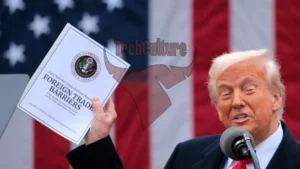
For decades, U.S. export controls have served as a bulwark against the proliferation of dual-use technologies—those with both civilian and military applications. The rationale has always been clear: maintain a technological edge and prevent strategic adversaries from closing the gap. Yet Trump’s suggestion to permit the sale of a “downgraded” Blackwell chip to China, in exchange for a share of the revenue, signals a pivot toward economic pragmatism. The proposal to allow Nvidia to offer a version with 30-50% less performance, while collecting a cut of the proceeds, blurs the line between safeguarding national security and monetizing technological advantage.
This move is not without precedent, but the scale and visibility are unprecedented. By intertwining export policy with direct financial incentives, the U.S. risks setting a controversial template for future trade negotiations. Critics warn that such a strategy could erode constitutional boundaries and international norms, turning national security into a bargaining chip. Meanwhile, proponents argue that it’s a savvy response to China’s relentless demand for AI hardware—one that could transform export restrictions from a blunt instrument into a lever for economic influence.
The Reality Gap: Rhetoric vs. Technological Substance
Trump’s dismissal of previously banned chips like Nvidia’s H20 and AMD’s MI308 as “obsolete” belies a more complicated technical reality. While political narratives often simplify, the H20, for example, remains a formidable processor for AI inference—an essential component for developing next-generation applications. This disconnect highlights a persistent challenge: policy decisions are frequently outpaced by the velocity of technological change.
The risk is that well-intentioned regulatory leniency could inadvertently accelerate China’s domestic AI capabilities. Allowing even “downgraded” chips into the Chinese market may provide a critical bridge, enabling local players to leapfrog developmental bottlenecks. For U.S. policymakers, the calculus is fraught: how to balance short-term economic gain against the potential for long-term strategic disadvantage.
Geopolitical Chess and the Future of Tech Leadership
The broader context is one of intensifying rivalry between the U.S. and China. Beijing’s sharp critique of U.S. export policies as an effort to “maliciously contain and suppress” Chinese innovation frames the debate as a zero-sum contest over technological sovereignty. The Trump administration’s willingness to experiment with revenue-sharing models and regulatory easing is more than just a shift in tactics—it represents a fundamental recalibration of how strategic technologies are managed in the international arena.
The ripple effects extend far beyond the U.S. and China. Taiwan’s TSMC, for instance, has announced a $100 billion expansion in the United States, a move shaped by both market logic and geopolitical pressure. The specter of tariff exemptions for key industry players, combined with direct intervention from top policymakers, signals a new era where semiconductor supply chains are treated as instruments of statecraft.
Where Innovation, Regulation, and Strategy Intersect
This evolving saga reveals a world in which technology markets are inextricably linked to geopolitical maneuvering. The fusion of trade policy and revenue generation, once unthinkable, is fast becoming the norm. For executives and investors, the message is clear: innovation cannot be disentangled from regulation, nor from the shifting tides of international strategy.
As the boundaries between economic imperatives and security priorities continue to blur, the semiconductor industry stands as a vivid case study in the complexities of 21st-century global competition. The choices made today—by companies, governments, and their leaders—will shape not only the future of technology, but the very architecture of global power.