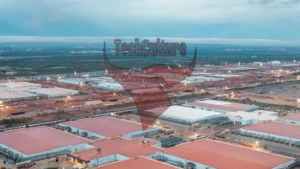
China’s AI-Powered Robotics Revolution: Transforming Global Manufacturing with £100B Investment
 Staff Editor
 China’s Robotics Revolution: Redefining the Global Industrial Order
The factories of tomorrow are being forged today on the assembly lines of China, where a new breed of humanoid robots is quietly rewriting the rules of manufacturing. At the heart of this seismic shift is not just the relentless march of automation, but the sophisticated integration of artificial intelligence with mechanical ingenuity—a fusion that promises to upend not only how products are made, but who makes them, and where.
Guchi Robotics and the New Frontier of Automation
Enter Chen Liang and Guchi Robotics, a venture emblematic of China’s technological ambitions. Their robots, capable of installing wheels, dashboards, and windows with mechanical precision, are steadily encroaching on tasks once thought to be the sole domain of human hands. Yet, the revelation that 80% of final assembly tasks remain untouched by automation is a stark reminder: the journey from human dexterity to robotic mastery is still underway. The gap, however, is narrowing, as deep learning algorithms and vast troves of data enable machines to replicate the subtlety and adaptability of human motion—heralding an era where the distinction between manual labor and machine work grows ever fainter.
Behind these advances lies a deliberate strategy. The Chinese government’s commitment of £100 billion to strategic technologies is more than a headline—it’s a clarion call to both startups and legacy manufacturers. With over 140 firms vying for a slice of the robotics market, competition is fierce, innovation relentless, and the prospect of disruptive breakthroughs all but assured. This state-backed ecosystem is not only accelerating the pace of technological progress but also compelling global manufacturing giants to reconsider their operational playbooks.
The AI-Robotics Nexus: Promise and Paradox
The convergence of robotics and AI is not merely a technical feat; it is a transformation with profound economic and ethical implications. As robots become more adept, industries are poised for quantum leaps in productivity and efficiency. However, this progress is shadowed by regulatory and societal questions. How do we ensure that the benefits of automation are broadly shared? What safeguards must be in place to protect workers and uphold safety standards?
Legislators and regulators face a daunting task: crafting frameworks that encourage innovation while preventing the pitfalls of unchecked automation. The specter of mass displacement looms large, particularly for the millions whose livelihoods depend on factory work. The challenge is not just technological, but human—demanding robust investment in vocational training and re-skilling to prepare workers for roles that machines cannot yet fill.
Geopolitics, Local Ecosystems, and the Global Supply Chain
China’s ascendancy in robotics reverberates far beyond its borders. As automation reshapes supply chains, international manufacturers—from General Motors to emerging market players—are increasingly drawn to Chinese robotics firms, amplifying the country’s influence over the future of global production. This recalibration of economic power is both an opportunity and a risk, with the potential to deepen technological divides and reshape the competitive landscape.
At the same time, the innovation ecosystem in China is not monolithic. Local governments, through targeted incentives and policy support, are nurturing a diverse array of startups, each addressing region-specific challenges and contributing to a multifaceted innovation landscape. This decentralized approach not only spurs local economic growth but also fosters a culture of experimentation and resilience.
Navigating the Automation Epoch
The narrative unfolding in China’s robotics sector is as much about promise as it is about responsibility. The symbiotic relationship between state investment, entrepreneurial dynamism, and AI-driven mechanical advances is propelling the nation to the forefront of the automation revolution. Yet, with this ascendancy comes the imperative to recalibrate labor policies, educational systems, and regulatory structures—to ensure that the march of progress is both inclusive and ethically grounded.
As the world watches, the choices made in China’s factories and policy circles will echo across continents. The future of manufacturing, labor, and economic power is being written now—one algorithm, one assembly line, and one robot at a time.