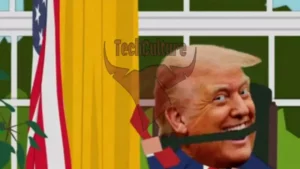
South Park Rebrands as “South America” to Satirize Political Renaming and Media Power
 Staff Editor
 Satire as Mirror: South Park’s “South America” and the New Cartography of Power
In an age defined by the collapse of boundaries between reality and spectacle, the latest move from South Park’s creative duo, Matt Stone and Trey Parker, lands with the force of a cultural thunderclap. Their audacious decision to rechristen the show as “South America” for its forthcoming season is not simply a sharp-edged parody of former President Trump’s penchant for geographical rebranding. It is a profound meditation on the fragility of national identity, the pliability of truth, and the ways in which entertainment, technology, and politics now form a seamless, mutually reinforcing ecosystem.
The Politics of Renaming: Branding, Patriotism, and the Post-Truth Era
Trump’s offhand proposals—relabeling New Mexico as “New America,” recasting the Gulf of Mexico, and even offering new monikers for Lake Ontario—are more than eccentricities. They are emblematic of a political environment where narrative control is paramount, and the act of naming becomes a tool of power. In this context, South Park’s self-reinvention as “South America” is a masterstroke of cultural satire: it exposes the absurdity of branding as a substitute for substance, and the ease with which public sentiment can be swayed by slogans rather than policy.
This satirical pivot is not just a lampoon of a single politician’s rhetorical flourishes. It is an indictment of a broader trend in celebrity-driven politics, where image supersedes ideology and the manipulation of symbols often eclipses the pursuit of genuine governance. In a media ecosystem saturated with viral memes and soundbites, South Park’s move is both a critique and a reflection—a reminder that the boundaries of reality are now defined as much by entertainment as by official decree.
Tech Titans, Media Consolidation, and the Erosion of Pluralism
The involvement of industry giants such as Apple, Google, and Paramount Skydance in the show’s evolving narrative underscores a deeper, more structural shift. As these corporations increasingly acquiesce to the whims of political power, the fusion of technology, entertainment, and politics accelerates. Paramount’s controversial merger with Warner Bros Discovery is only the latest chapter in a saga of consolidation that has narrowed the spectrum of voices in the media landscape.
This trend raises urgent questions about regulatory oversight, conflicts of interest, and the concentration of influence. When a handful of conglomerates control the platforms through which stories are told and retold, the risk of homogenized narratives grows. The stakes are not merely commercial—they are fundamentally democratic. South Park’s satirical renaming, viewed against this backdrop, becomes a commentary on the corporatization of culture and the precariousness of dissent in an era of centralization.
Satire as Social Barometer: Humor in an Age of Misinformation
Beneath the surface of irreverence, South Park’s rebranding is a canary in the coal mine—a signal of the civic health of an increasingly polarized society. Satire, in this context, is not escapism but a form of resistance. By holding a funhouse mirror to Trump’s nationalist rhetoric, Stone and Parker invite viewers to interrogate the stories they are told about sovereignty, identity, and belonging. In a time when misinformation can be weaponized to deepen divides, such humor serves as both critique and catalyst for dialogue.
The show’s transformation is also a subtle acknowledgment of the ways in which algorithms and social media now shape public discourse. As traditional regulatory frameworks lag behind the pace of technological change, satirical programming fills a vital gap—calling out excesses, puncturing pretensions, and reminding audiences that the truth is not always what it seems. The playful moniker of “South America” is thus both a jab at political grandstanding and a meditation on the commercialization of the very culture it lampoons.
South Park’s latest gambit stands as a testament to the enduring power of satire—not merely to entertain, but to illuminate the shifting ground beneath our collective feet. In a world where narratives are currency, and the line between fact and fiction grows ever thinner, humor remains one of the last, best tools for making sense of it all.