Alex Gibney’s Documentary Unveils Elon Musk’s Innovation, Ethics, and Tech Power Dynamics
 Staff Editor
 Unraveling the Musk Paradox: Innovation, Influence, and the Ethics of Power
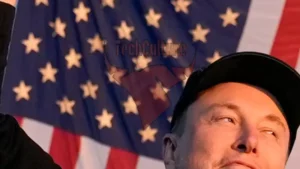
Alex Gibney’s latest documentary, unveiled at the Venice Film Festival, peels back the layers of Elon Musk’s mythos with a rare, unflinching gaze. Stretching nearly four hours, the film offers more than a biographical portrait—it is a meditation on the volatile chemistry of innovation, statecraft, and ethics in the digital age. For those at the intersection of business and technology, Gibney’s work is less a mere chronicle of Musk’s ascent than a prism through which to examine the forces shaping twenty-first century disruption.
The Public-Private Nexus: Rethinking State Support for Tech Visionaries
Much of Musk’s legend rests on his image as the quintessential self-made entrepreneur—a maverick who bends the world to his will. Yet Gibney’s documentary methodically dissects this narrative, exposing the scaffolding of government support that underpins Musk’s empire. From SpaceX’s NASA contracts to Tesla’s generous subsidies, the state emerges not as a passive bystander but as a critical partner in the rise of private innovation.
This revelation lands with particular resonance in an era where public-private partnerships drive everything from quantum computing to renewable energy. Gibney’s analysis compels business leaders and policymakers alike to grapple with the evolving role of government: Is the state a mere enabler of entrepreneurial risk, or an arbiter ensuring that technological progress serves the public good? The documentary invites a reexamination of regulatory frameworks, market competition, and the ethics of subsidizing disruption—questions that cut to the heart of how societies nurture and constrain their most ambitious innovators.
The Human Factor: Genius, Vulnerability, and the Price of Vision
Beyond the boardroom and the launchpad, Gibney’s film delves into the psychological crucible from which Musk’s ambitions have emerged. The documentary’s most arresting moments reveal a figure driven not by charisma but by unvarnished intellectual fervor. Musk’s excitement during SpaceX launches, his relentless pursuit of engineering breakthroughs, and his willingness to embrace technical risk all speak to a brand of leadership that privileges substance over style.
Yet, this portrait is far from hagiographic. Gibney draws out the contradictions and vulnerabilities that shadow Musk’s public bravado. The founder’s fixation on existential risks—manifest in both his technological pursuits and personal life choices—underscores the profound anxieties that often accompany visionary leadership. The film’s exploration of Musk’s family planning, driven by fears for humanity’s future, reframes the narrative of tech titans as not merely disruptors, but as individuals grappling with the weight of their own philosophies.
Technology and Power: Navigating the Ethics of Influence
Where the documentary truly unsettles is in its depiction of Musk’s political entanglements and ethical ambiguities. Gibney chronicles Musk’s oscillations between political camps, his provocative predictions about electoral outcomes, and his cultivation of relationships with figures from President Obama to Donald Trump. These episodes illuminate the increasingly porous boundaries between Silicon Valley and the corridors of power—a dynamic that raises urgent questions about democratic accountability in an era of algorithmic influence.
The film’s treatment of Musk’s reported “suicidal empathy” and his often abrasive management style further complicate the archetype of the benevolent innovator. As artificial intelligence accelerates toward new frontiers, voices like Geoffrey Hinton’s amplify concerns about whether even the most brilliant technologists are equipped to steward such transformative tools responsibly. The specter of AI-driven electoral manipulation and geopolitical upheaval is not merely speculative; it is a clarion call for robust risk management and ethical oversight.
A Cautionary Tale for the Age of Disruption
Gibney’s exhaustive exploration of Musk transcends the boundaries of biography. It is a mirror held up to the business and technology community, reflecting both the allure and the perils of entrusting epoch-defining innovation to individuals whose genius is inseparable from their idiosyncrasies. As the lines blur between public interest and private ambition, the documentary challenges us to confront the true costs—and responsibilities—that accompany the pursuit of technological greatness. In this era of rapid transformation, the Musk paradox remains a defining riddle, demanding vigilance, humility, and a renewed commitment to ethical stewardship.