Yayoi Kusama’s Immersive Infinity Rooms Revolutionize Contemporary Art and Global Culture
 Staff Editor
 Yayoi Kusama: Immersion, Innovation, and the Expanding Canvas of Contemporary Art
Yayoi Kusama’s artistic legacy is more than a visual spectacle—it is a living testament to the transformative power of immersive experience. As the world continues to grapple with the boundaries between the digital and the tangible, Kusama’s work stands as a luminous beacon, guiding both the art world and the broader business landscape toward a future where creativity, commerce, and connectivity converge.
From Infinity Rooms to Infinite Resonance
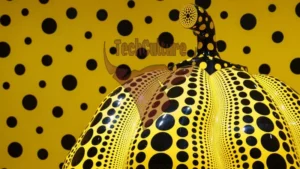
Step inside a Kusama installation, and the world blurs at the edges. Her iconic polka dots and mesmerizing infinity mirror rooms invite not just observation, but participation—a rarefied invitation to become part of the artwork itself. This boundary-dissolving approach has not only captivated seasoned art collectors but has also drawn in those who might otherwise have felt alienated by the traditional gallery experience.
Anecdotes abound: marriage proposals staged amid the endless reflections, moments of silent contemplation within the immersive “Dots Obsession – Aspiring to Heaven’s Love.” These are not isolated incidents; they are emblematic of a seismic shift in the art world, where experiential installations now rival, and sometimes surpass, the allure of static masterpieces. Kusama’s environments transform passive viewers into active collaborators, mirroring a larger trend in contemporary culture—one that values engagement, personalization, and shared emotional resonance.
Experiential Art and the Economics of Immersion
Kusama’s influence extends far beyond the aesthetic. Her installations have catalyzed a new economic paradigm in the arts, one where the experience itself becomes the commodity. Museums hosting Kusama’s exhibitions report unprecedented attendance numbers, while her visual language inspires collaborations across fashion, technology, and product design. The secondary art market, too, has thrived on the back of her global popularity, with Kusama pieces commanding premium prices and attracting a diverse international clientele.
This surge in demand for immersive experiences dovetails with broader technological shifts. As virtual and augmented reality platforms gain traction, the appetite for art that straddles the digital-physical divide has never been stronger. Kusama’s tactile, enveloping environments offer a template for future exhibitions—where sensory engagement and emotional impact are as prized as artistic pedigree. Investors and institutions are taking note, pouring resources into ventures that promise not just viewership, but memorable, shareable experiences.
The Interplay of Vulnerability, Genius, and Market Forces
Integral to Kusama’s narrative is her candid engagement with mental health. Her art is both catharsis and revelation, and her willingness to foreground her struggles has challenged entrenched taboos within the creative industries. Yet this openness raises complex questions: How do we honor the vulnerable genius of artists without reducing their personal histories to mere marketing narratives? As the art world becomes increasingly commercialized, the ethical imperative to protect the dignity of creators—while celebrating their contributions—grows ever more urgent.
Cultural institutions and regulatory bodies are beginning to grapple with these issues, exploring frameworks that balance commercial interests with respect for the artist’s lived experience. Kusama’s story thus becomes a fulcrum for broader conversations about mental health, authenticity, and the responsibilities of those who profit from creative labor.
Art as a Bridge in a Fractured World
Kusama’s reach is undeniably global. Her exhibitions, from Tokyo to Paris, serve as crucibles for cross-cultural dialogue, reinforcing the notion that art can transcend language, politics, and geography. In an era marked by geopolitical uncertainty, Kusama’s installations offer a rare space for connection and understanding—a universal language in a world too often divided by difference.
The enduring appeal of Kusama’s work lies in its capacity to forge connections: between artist and audience, between tradition and innovation, and between disparate cultures. As immersive art becomes ever more central to both cultural and economic life, Kusama’s legacy is set to shape not only the future of creative expression, but also the way we navigate the complexities of a rapidly evolving global society.