Young Professionals Spark Artisanal Renaissance, Blending Tradition with Modern Luxury Markets
 Staff Editor
 The Artisanal Renaissance: Young Professionals Reclaim Heritage Crafts in the Age of AI
In the shadow of relentless technological advancement, a quiet revolution is unfolding. Across Europe and North America, a new generation of professionals is turning away from algorithmic workflows and digital monotony, seeking meaning and mastery in the tactile world of heritage crafts. This isn’t a nostalgic retreat—it’s a sophisticated response to the existential questions posed by automation, artificial intelligence, and the commodification of creativity.
Beyond the Algorithm: The Allure of Human Craftsmanship
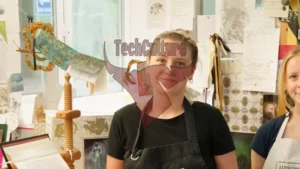
For many, the shift is deeply personal. Eryn Lawley, a 27-year-old former digital marketer, now spends her days binding books by hand—a profession that, at first glance, appears anachronistic in a world obsessed with speed and scalability. Yet Lawley’s journey is emblematic of a broader movement: young professionals actively choosing the slow, deliberate cadence of craft over the frictionless efficiency of code.
This migration towards manual trades is more than a career pivot; it is a nuanced act of resistance. In an era where artificial intelligence promises to automate not only repetitive labor but also creative tasks, the desire to make something singular—imbued with the idiosyncrasies of the maker’s touch—has never been more pronounced. The unique imperfections of a hand-bound book or a forged metal sculpture stand as quiet rebukes to the uniformity of mass production. Here, the limits of AI are laid bare: while machines excel at replication, they struggle to capture the subtlety, emotion, and heritage woven into artisanal work.
Luxury Markets and the New Value Proposition
This resurgence is not confined to dusty workshops or niche hobbyists. The luxury and bespoke goods markets are already recalibrating, with high-end publishers like the Folio Society privileging hand-crafted artistry over AI-generated imagery. For discerning consumers, authenticity is becoming a premium asset—one that digital tools, for all their power, cannot easily replicate.
The appeal lies in narrative and connection. Each object crafted by human hands carries a story—a lineage of technique, tradition, and personal investment. This intangible value is increasingly prized in a marketplace saturated with digital reproductions. As a result, heritage crafts are not just surviving; they are thriving, driving new demand in luxury branding, experiential retail, and even the travel sector, where artisanal workshops are becoming destinations in their own right.
Apprenticeships, Education, and the Future of Work
The competitive surge in applications for apprenticeships at design houses like Cox London signals a profound shift in workforce values. Young professionals now seek roles that offer not just financial stability, but also deep engagement and resilience against automation. Institutions such as the National Theatre are responding by expanding technical apprenticeships in endangered crafts, suggesting that education itself may be on the cusp of transformation.
Emerging models increasingly advocate for interdisciplinary learning—where technological fluency is balanced with manual dexterity and creative problem-solving. This evolution is not merely academic; it is a strategic necessity in a labor market where adaptability and uniqueness are prized above rote efficiency.
Policy, Ethics, and the Geopolitics of Craft
The artisanal renaissance is forcing policymakers to rethink the scaffolding of modern economies. As AI and automation continue to upend traditional industries, the imperative to support vocational training in non-digital skills grows stronger. Countries that successfully blend innovation with preservation of cultural heritage may find themselves at the forefront of sustainable, human-centered economic development.
Ethically, the revival of craftsmanship challenges society to reconsider the value of human effort. While AI can mimic style and accelerate production, it cannot replicate the creative intuition, ethical decision-making, or the deep satisfaction derived from making something by hand. As debates around automation, intellectual property, and the dignity of work intensify, the resurgence of artisanal trades offers a compelling counter-narrative—one that champions balance, authenticity, and the enduring power of human ingenuity.
In the end, as the digital tide rises, the steady hands of craftspeople remind us that some forms of value—and meaning—are forged, not coded.