Wallace Shawn’s New Plays Reveal Lessons on Integrity and Authenticity for Leaders in Business and Tech
 Staff Editor
 Wallace Shawn and the Art of Uncomfortable Truths: Navigating Integrity in a Commercial Age
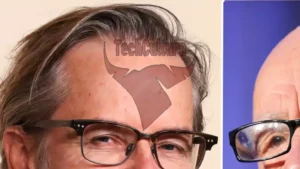
Few figures in contemporary theater embody the tension between creative candor and commercial constraint quite like Wallace Shawn. At 82, Shawn’s latest productions—“What We Did Before Our Moth Days” and a revival of “The Fever”—are not just artistic milestones; they are incisive explorations of the enduring friction between personal conviction and the pragmatic realities of the entertainment industry. For business and technology leaders seeking parallels in their own domains, Shawn’s career arc offers a compelling meditation on the costs and consequences of authenticity in environments shaped by economic and ideological pressures.
The Personal as Political: Shawn’s Radical Introspection
Shawn’s current theatrical work is distinguished by a raw, direct engagement with his audience. Dispensing with the safety net of traditional narrative, he transforms the stage into a crucible of vulnerability and confrontation. This stylistic pivot is emblematic of a broader movement in performance art, where the boundaries between artist and spectator, fiction and confession, are increasingly blurred.
Central to Shawn’s narrative is the mining of his own family history—most notably, the reverberations of his father’s affair and its implications for the bourgeois milieu from which he hails. The effect is both intimate and universal: by exposing the fissures in his own lineage, Shawn invites audiences to interrogate the unspoken codes underpinning their own institutions, whether familial, corporate, or societal. In a business climate where transparency and authenticity are prized yet often elusive, Shawn’s willingness to leverage personal vulnerability as a catalyst for social critique stands as a model for leaders navigating the complexities of organizational culture and public accountability.
Institutional Integrity in an Age of Economic Pressures
Yet Shawn’s introspective artistry is inseparable from his outspoken political stance—particularly his advocacy for Palestine and his pointed criticism of academia’s susceptibility to donor influence. In a time when universities, media organizations, and even technology firms grapple with the consequences of aligning too closely with powerful stakeholders, Shawn’s warnings about the erosion of institutional independence resonate far beyond the theater.
His critique is not simply about the arts; it is a cautionary tale for any sector where economic imperatives threaten to override ethical commitments. For technology executives, the parallels are clear: as platforms and products become ever more entangled with the interests of advertisers, investors, and political actors, the challenge of maintaining integrity grows more acute. Shawn’s career, marked by both acclaim and marginalization, underscores the risks faced by those who refuse to conform to dominant narratives—a dynamic as relevant to Silicon Valley as it is to Broadway.
The Price of Dissent: Navigating the Marketplace of Ideas
Shawn is candid about the professional costs of his political honesty. Hollywood, like many industries, tends to reward compliance and sideline dissent. This reality is echoed in the broader economy, where innovation and critical thinking can be stifled by the gravitational pull of market expectations and regulatory orthodoxy.
But Shawn’s journey also illustrates the enduring value of principled dissent. His refusal to separate art from activism, or personal reflection from public critique, has carved out a distinctive space in the cultural landscape—one that prioritizes long-term credibility over short-term gain. For business and technology leaders, the lesson is clear: navigating the marketplace of ideas demands not only strategic acumen but also a willingness to risk alienation in the service of deeper truths.
Art, Accountability, and the Future of Authenticity
At its core, Wallace Shawn’s body of work is a sustained inquiry into the responsibilities of the artist—and, by extension, the leader—in a world where commercial and ideological pressures are inescapable. His fusion of personal metamorphosis with societal critique invites us to reconsider the boundaries between private conviction and public action, between market viability and ethical integrity.
For those charged with steering organizations through the uncertainties of the digital age, Shawn’s example is both a challenge and an inspiration. The path of authenticity is rarely easy, but as Shawn demonstrates, it is the crucible in which lasting influence and genuine innovation are forged.